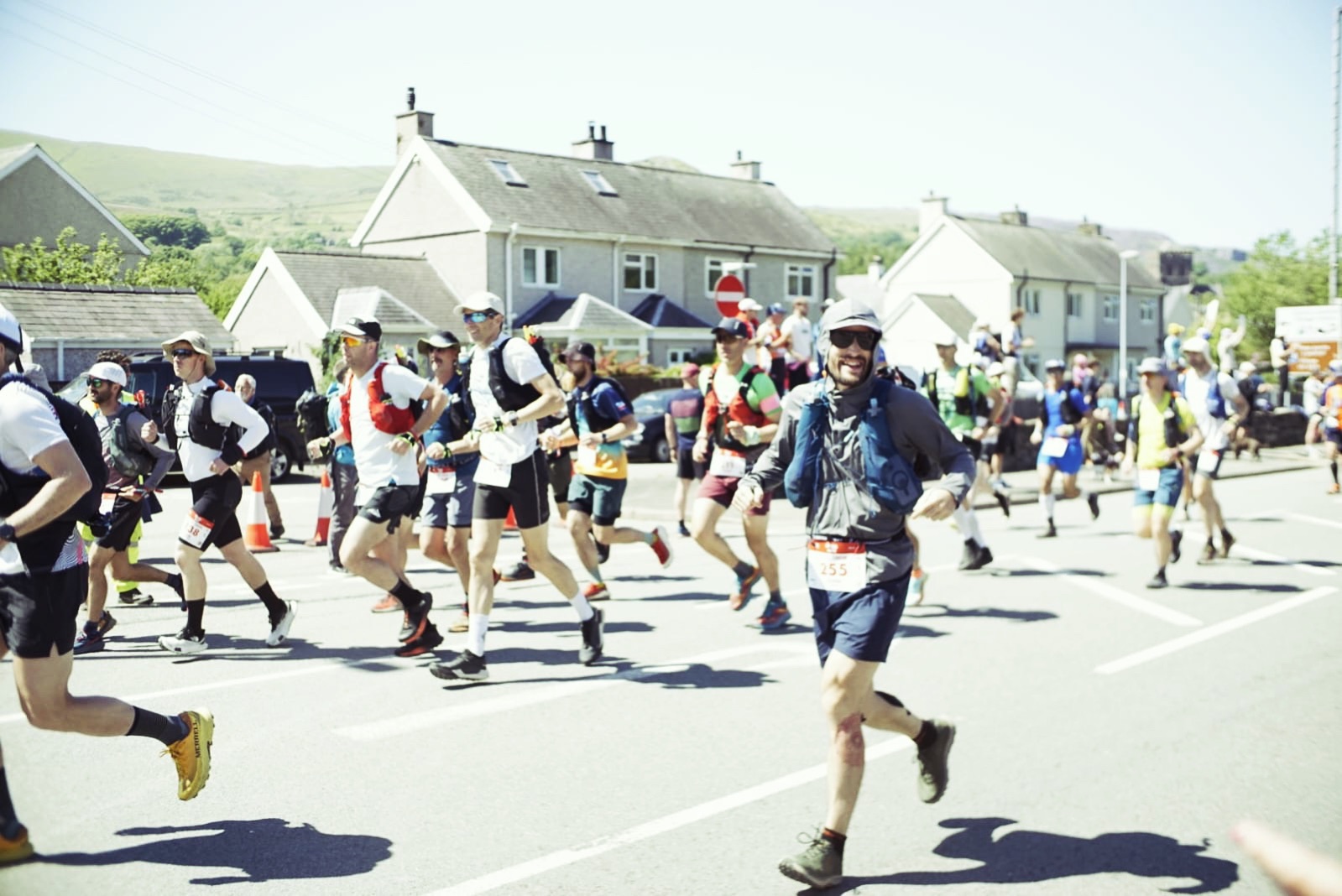
‘Beautiful beyond belief. Savage beyond reason’
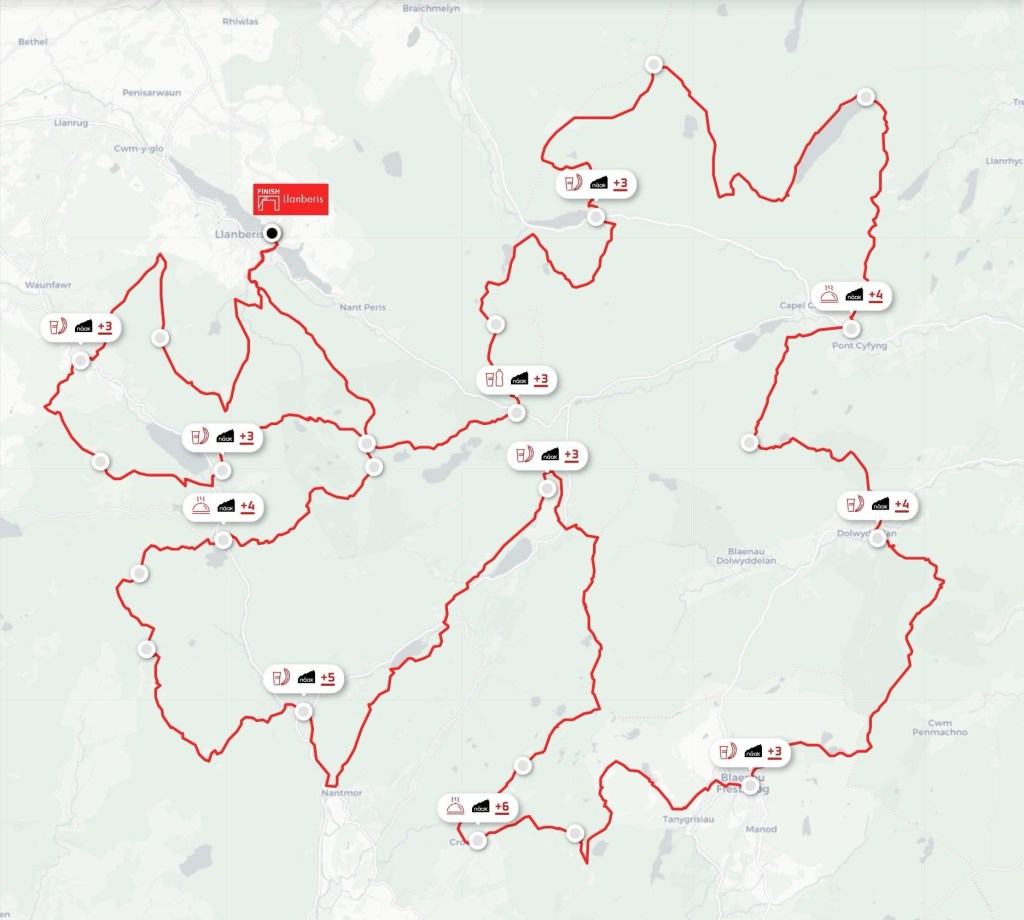
It’s done. After eight months of focused training, long days on the trails, and countless spreadsheets, I finally toed the line for my first 100-miler—and ran it as hard and fast as I could. The Ultra-Trail Snowdonia 100 (UTS100) wasn’t just another race. It was a monster of a course—170 km with over 9,000 metres of brutal ascent, technical terrain, and every kind of trail Eryri National Park could throw at you. In short: it’s the ultimate test in one of the UK’s wildest and most beautiful places.
Pre-Race Gear Jitters
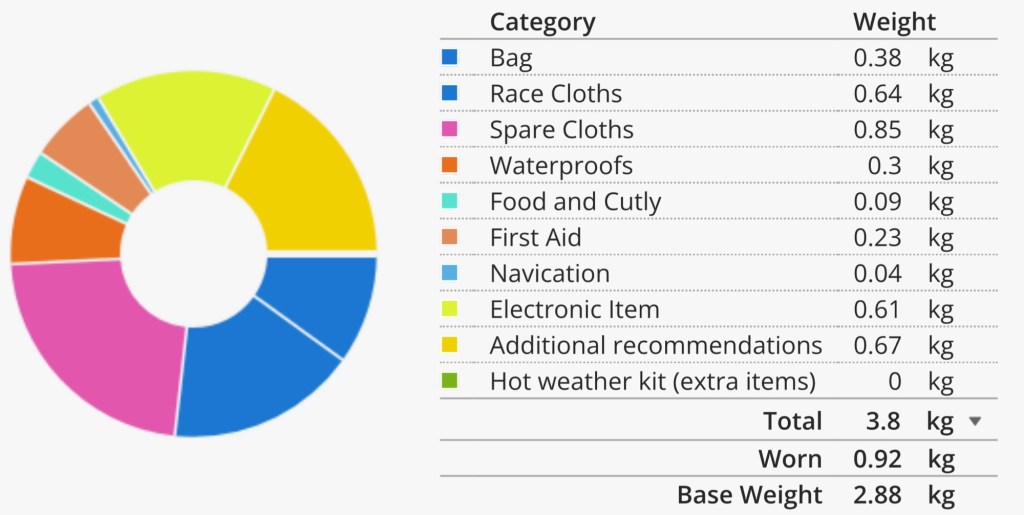
Like any long ultra, the kit list was part strategy, part anxiety. I’d packed and repacked a dozen times. I was confident everything on my LighterPack list met the mandatory kit, but the little decisions still mattered.
- Headtorches: I ran a Petzl e+Lite with a Nitecore NU25 backup for the daytime hours (combined weight: 75g), then switched to the heavier but bombproof Petzl Myo for night—solid beam and reliable 16-hour life, tested from The Spine.
- Layering: The Argon windbreaker from Alpkit combined with my Nofry Sun Hoodie from KETL turned out to be a better combo in the wind than adding another warm layer.
- Poles: The only frustration. My quiver setup kept tangling—taking poles in and out often meant bag-off, which broke flow unless I got help.
Race Start to Checkpoint 3: Strong Start, Sloppy Mistake
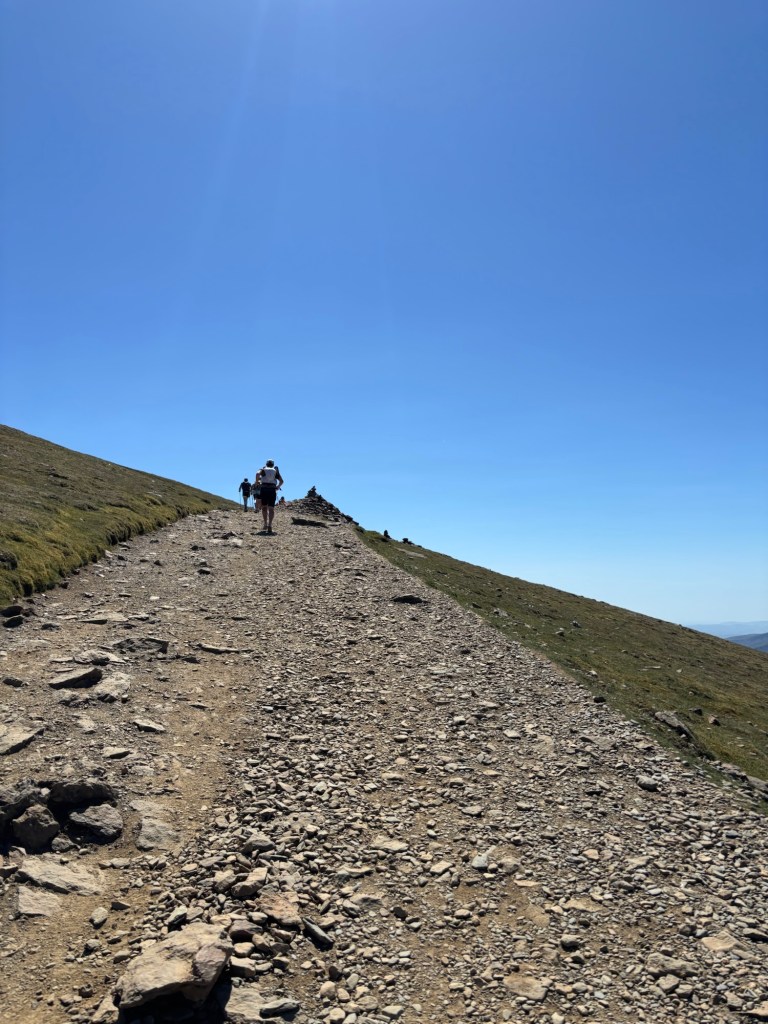
The early miles felt strong. The climb up the Llanberis path (Yr Wyddfa) was solid, and the descent into Pen-y-Pass smooth. But I blew it at the first aid station—rushed through and didn’t fully fill my bottles before the long stretch over Devil’s Kitchen into the Ogwen Valley. Big mistake. I paid for it with running out of water and some nutrition struggles. Still, seeing Nat on course and Mark at CP2 gave me a huge lift. For our first time crewing together, it was a slick operation.
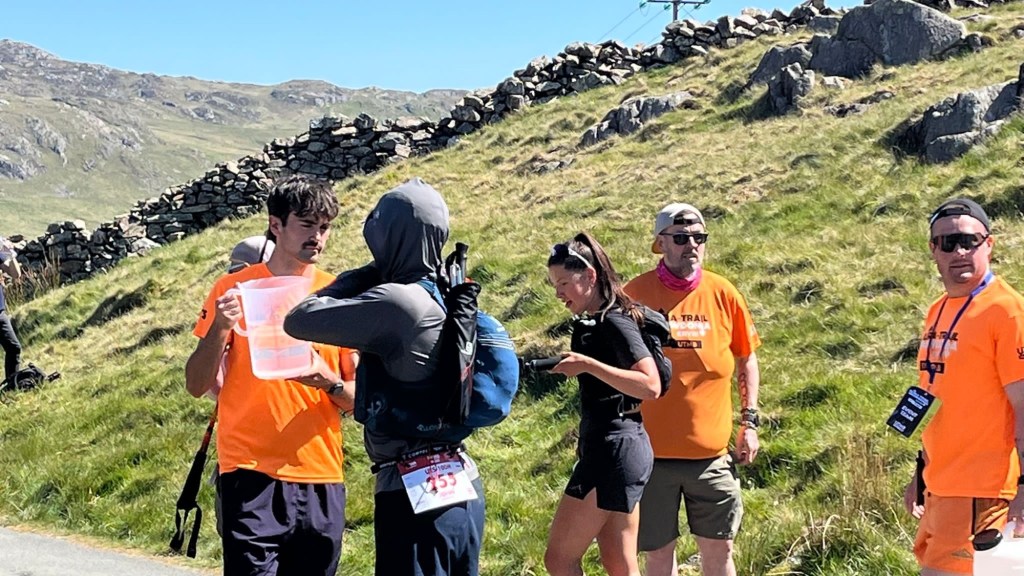
Despite struggling to eat (every 20 minutes was too frequent—note to self: try 30 minutes next time), I eventually got in a wrap and 500ml of water. On the climb up to Pen Yr Ole Wen, that helped. The views across to Anglesey were unreal, and the descent into Llyn Eigiau was bliss after all the rocky terrain. Hitting CP3 before sunset was one of my big goals—and I nailed it.
The Beginning of the Night Shift
As nightfall came, I slipped into a steady rhythm. The rollers toward Capel Curig were peaceful—even if the heather got tedious in places. Moel Siabod’s climb felt steady; I just picked runners off one by one. The descent, though, was slower—no recce meant second-guessing some poorly marked sections.
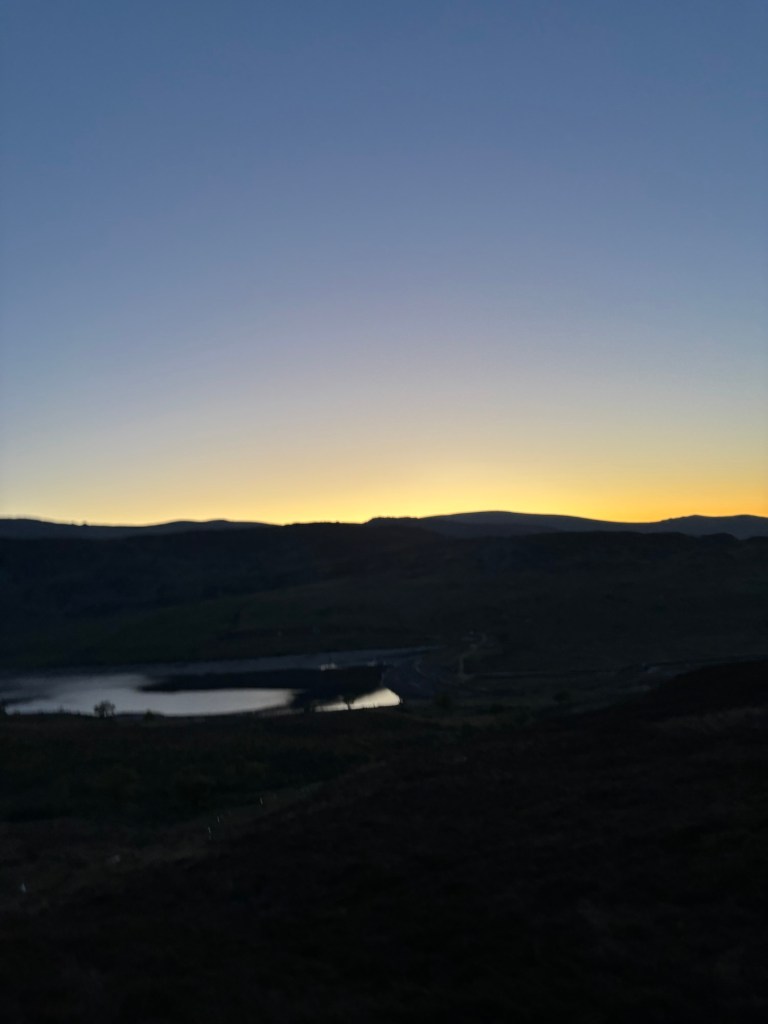
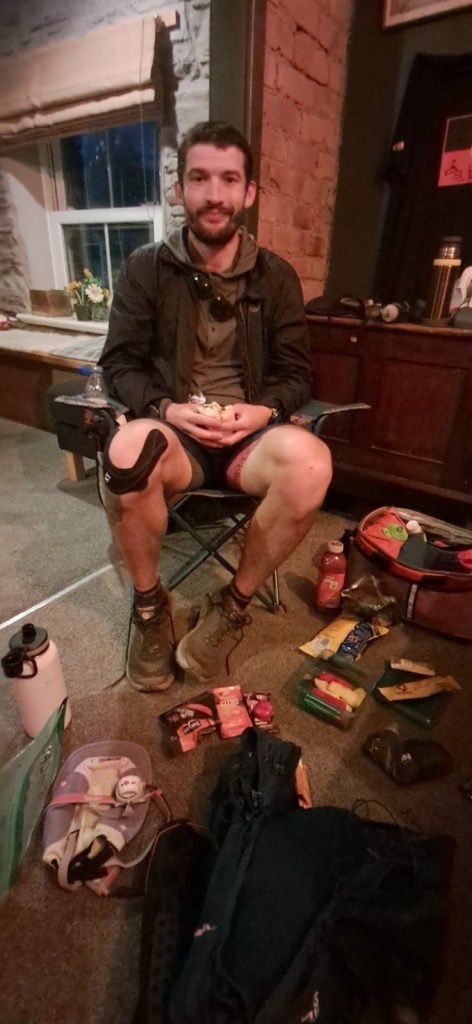
I took on some soup at Capel Curig and, in true twin fashion, managed to confuse a volunteer into thinking I was Mark. Classic. Still, I arrived in Dolwyddelan feeling good. I made sure to refill all water bottles properly, took on coffee, fruit, a half wrap, and—lifesaver—Irn-Bru. Mark kept pushing me to eat more. I listened.
Morning Miles and Mid-Race Highs
Leaving Dolwyddelan, I looked back toward the descent from Moel Siabod and caught one of the most striking views of the race: a rhythm of headtorches winding down the mountain in the dark.
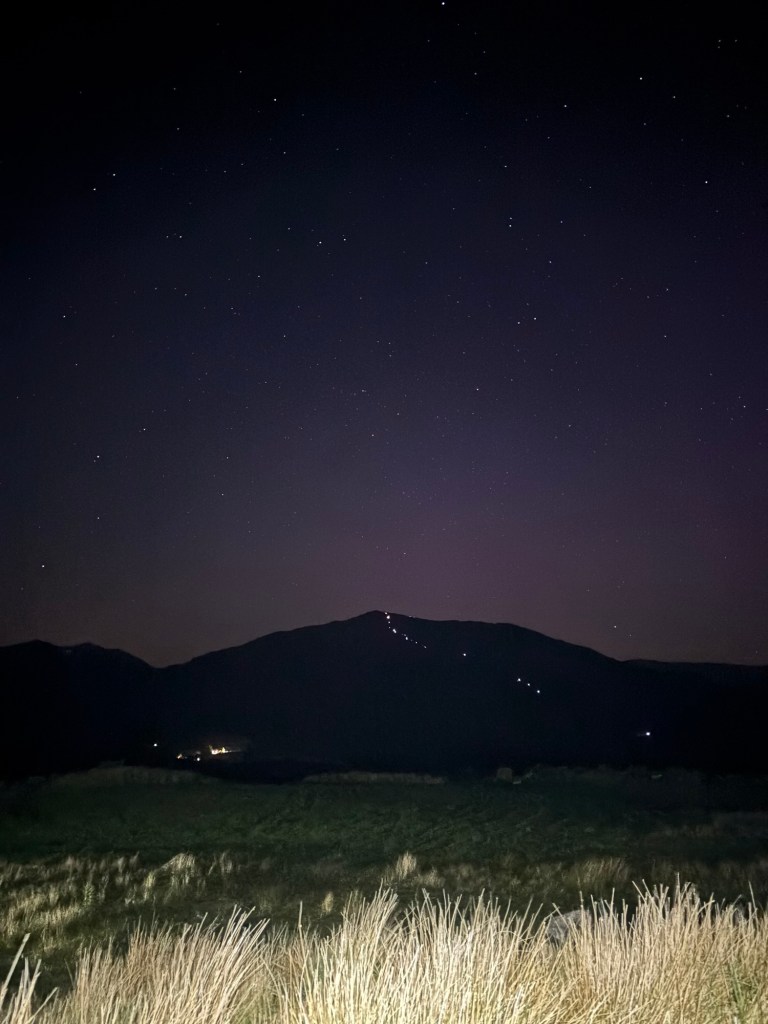
Rolling into Blaenau Ffestiniog, I was feeling strong, focused, and well ahead of schedule. From here through to Beddgelert was probably my favourite part of the course—flowing trails, less technical terrain, and jaw-dropping views. I also crossed paths with plenty of good characters. Whether overtaking or being overtaken, I always made a point to check in.
Soon after, I hit the climb up Moelwyn Mawr just as the sun began to rise. Golden light spilled across the ridges—a proper “this is why we do this” moment. Just as I was settling into the climb, I got a call from Alyssa. Being in different time zones has its advantages sometimes, and hearing her voice right then gave me a real boost. It made for a perfect start to day two—fresh light, fresh legs, and a reminder of the people cheering me on from afar.
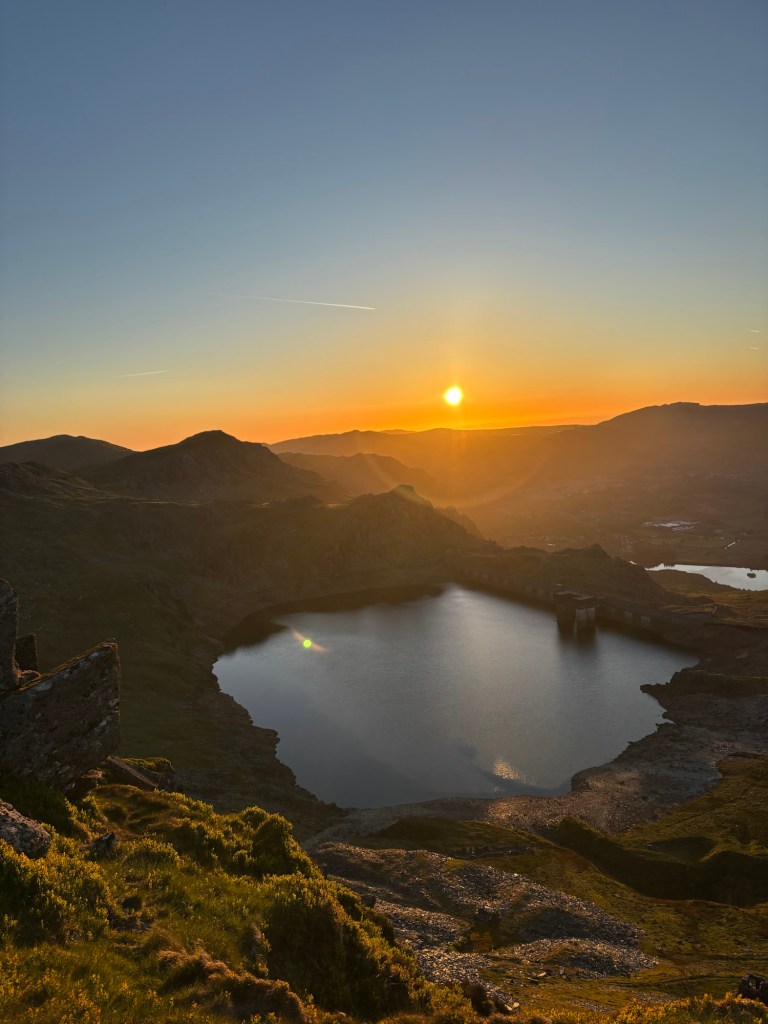
Checkpoint 7—Croesor—marked the halfway point. I ate half a wrap, restocked, refilled, and mentally prepared for the long haul to Bwlch-y-Groes.
Where the Struggle Began
The climb out of Croesor and over Cnicht was boggy and rough. Twice I went knee-deep in water. Wet feet meant blisters. I should’ve taped up properly—lesson learned.
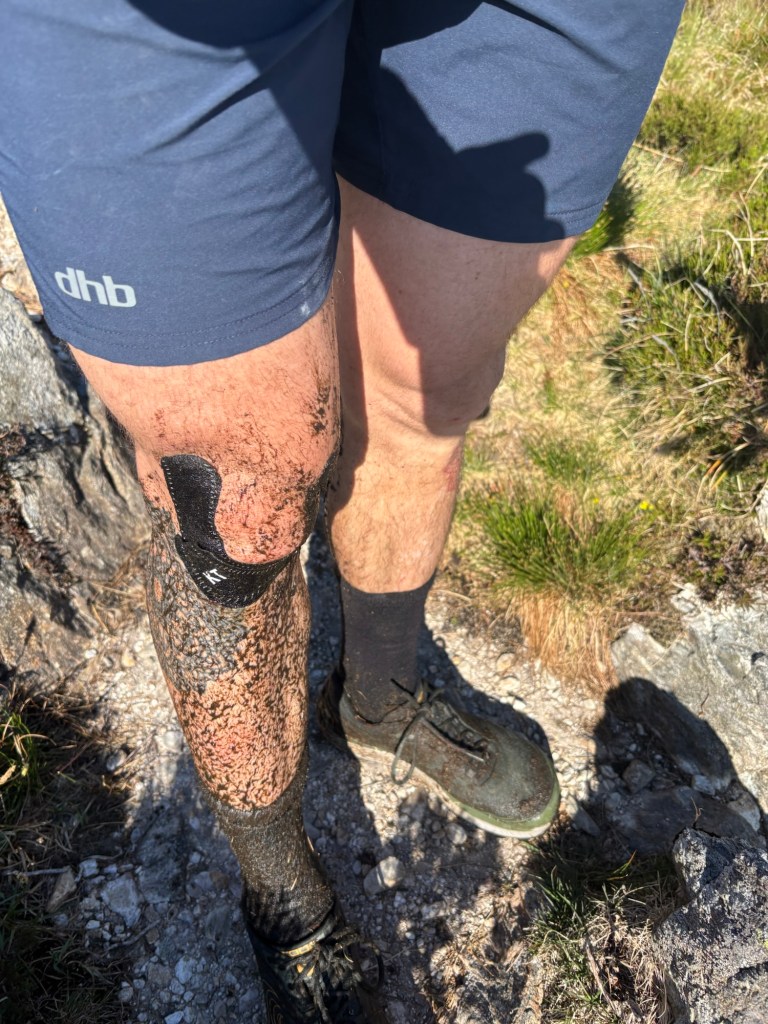
At Bwlch-y-Groes, I took 20–30 minutes to pop blisters, dry off, and tape up. The sun was now high and relentless. Somewhere between checkpoints, I ran into Nat again—a total lift. Right person, right time.
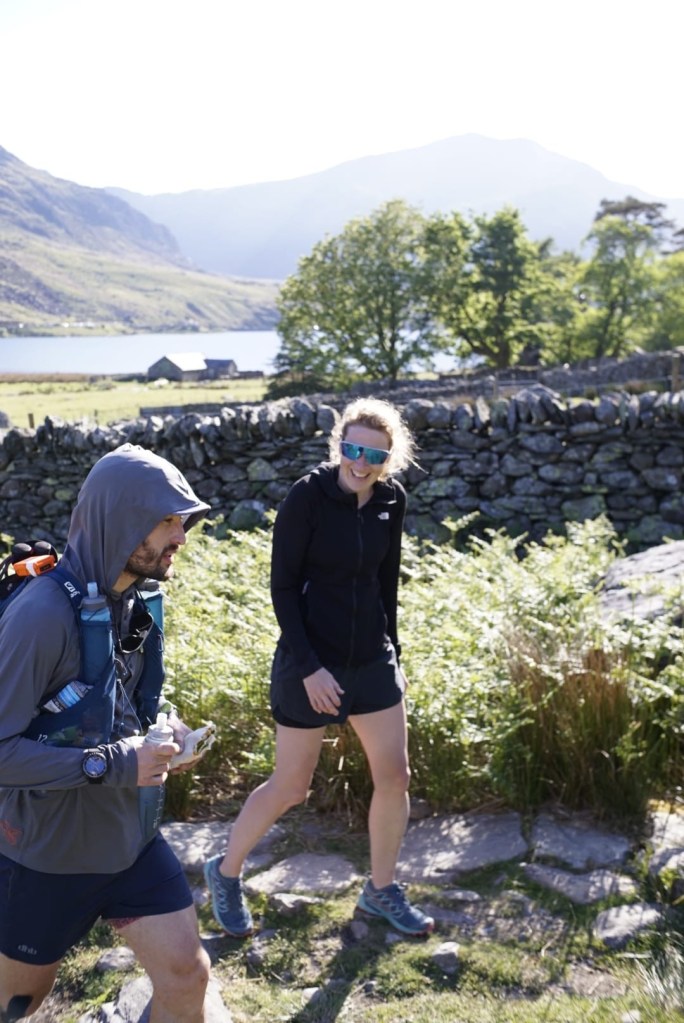
Later, I stopped to help an older man who’d fallen while out walking with a new knee. Every part of me said I was losing time—but helping him was the right call.
I arrived at Beddgelert physically and mentally drained. Mark was there again. I got food in, got sorted, and locked in for the next push over Moel Hebog.
The Big One: Moel Hebog and Beyond
Moel Hebog is brutal—steep, exposed, relentless. Over 1,300m of climbing stacked in one section. I broke it into chunks and kept moving forward.
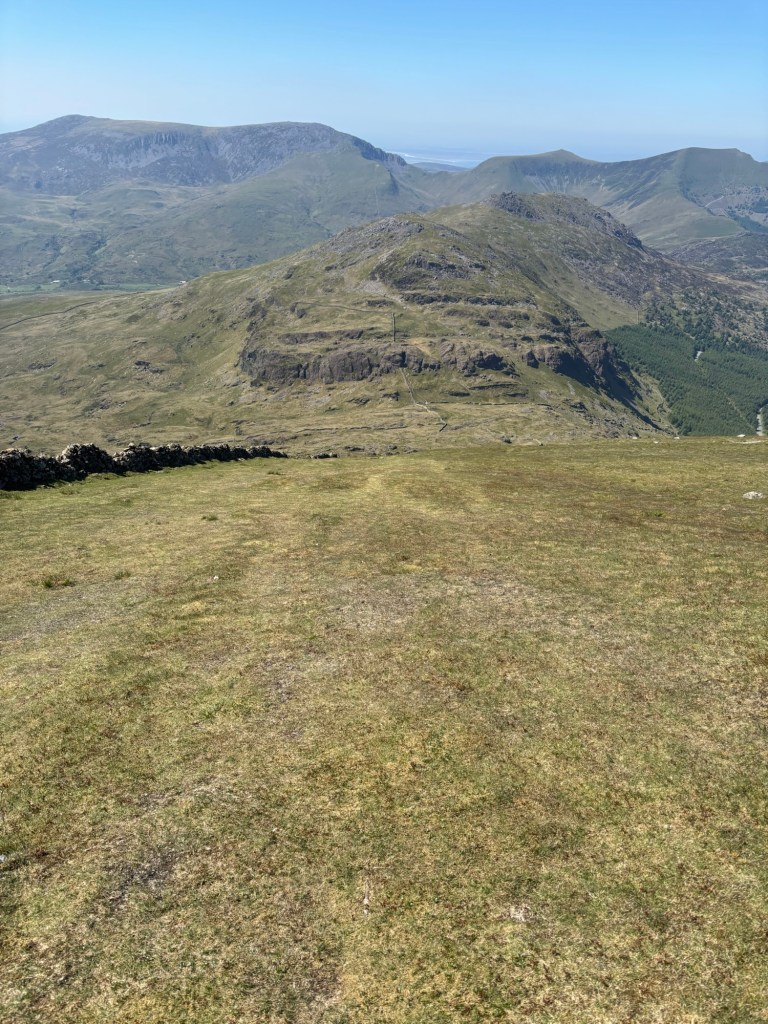
At the checkpoint after, I devoured fruit, noodles, and downed electrolytes. I knew I had three climbs left—including a final push up Yr Wyddfa via the Rhyd Ddu Path. Sub-40 hours was still within reach, but the margin was tight.
Climbing Yr Wyddfa (Again)
The Rhyd Ddu Path felt solid. Familiar terrain, steady pace. I passed 100K runners, using them as targets. The summit finally came into view.
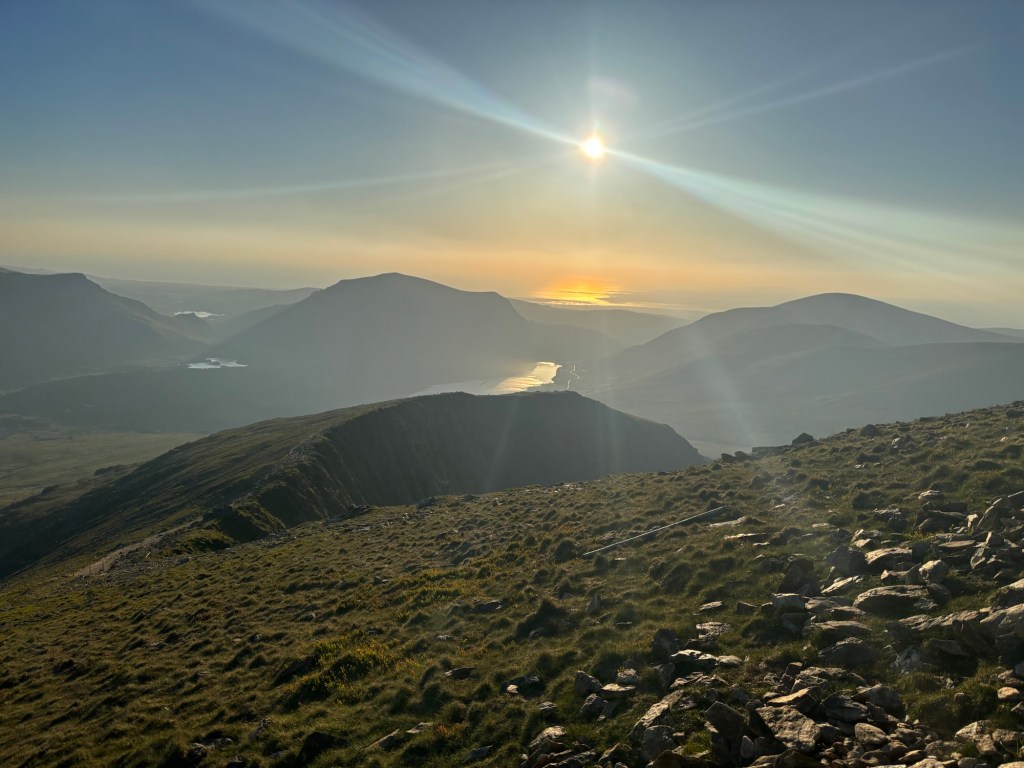
At the top of Yr Wyddfa, I didn’t stop—I dropped straight into the descent. I was still ahead of sunset, and I wanted to keep it that way. Mark would be waiting at the next and final crew point.
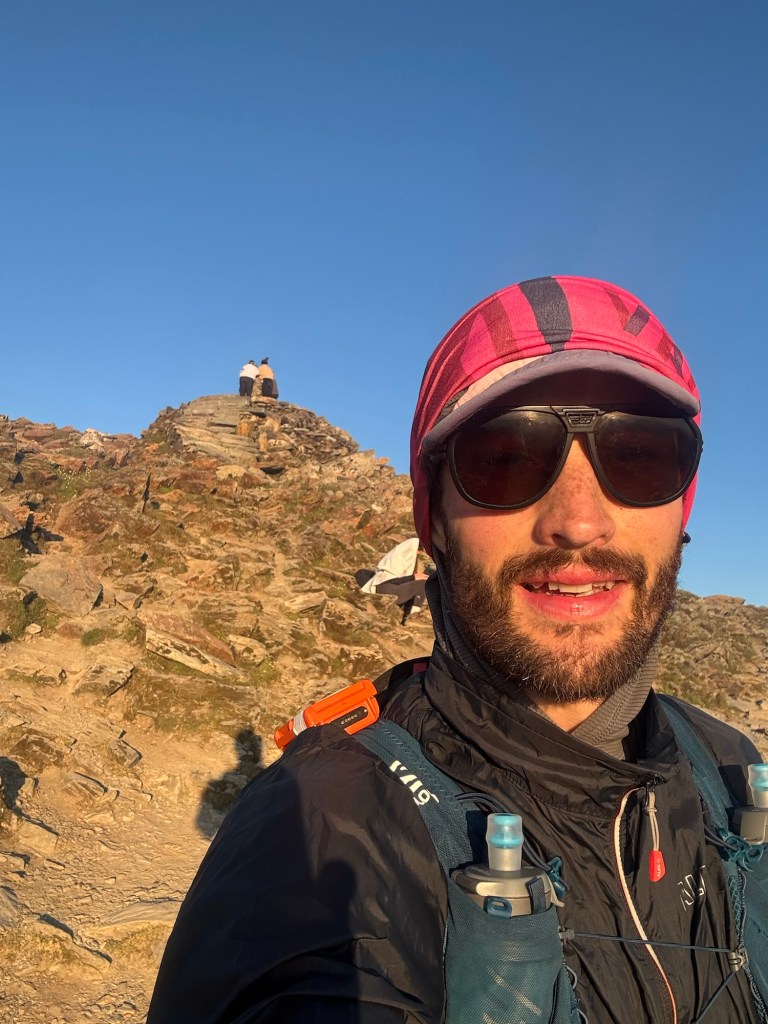
All Out: The Final Push
I hit the final checkpoint hard—food, water, mental reset. Mark gave me the final push: “Two climbs left. Get it done.”
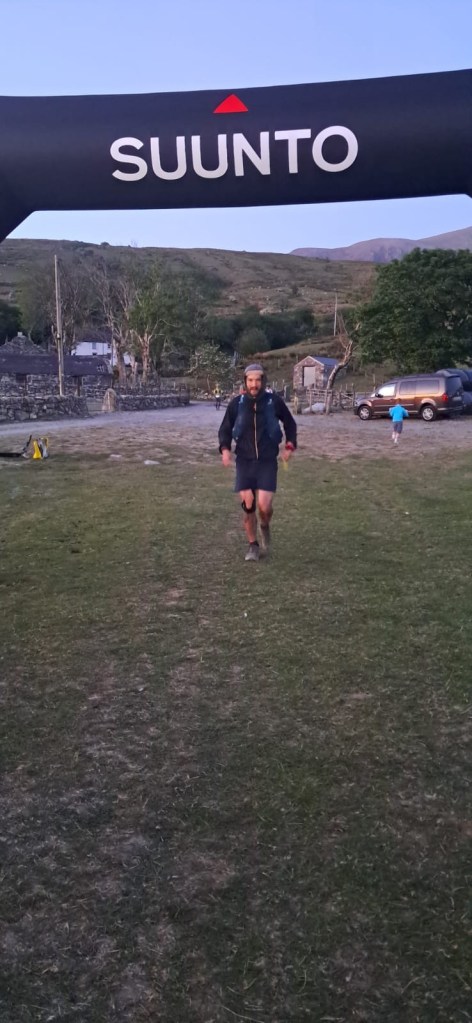
I climbed confidently, driven by memory from February’s recce. The summit of Moel Eilio arrived and I made a call to my brother: “I’m going to be done before 3 o’clock!” Saying it out loud flipped a switch.
I dropped into Telegraph Valley like I was on fire. Music in, legs flying. I was running 7:00/km pace—then 5:30/km for the last stretch.
The lights of Llanberis came into view. I turned the final corner. Mark and Debbie were there cheering. I crossed the line in 37 hours, 50 minutes, and 31 seconds.
Reflections, Crew, and Coaching
My goal for UTS100 was 35–40 hours, with a hard target of 37. I landed right at the edge—37:50—and gave it everything I had. That final push was the most focused I’ve ever been in a race. No regrets.
Having Mark crew for me (pit bitch) was one of the highlights. After crewing him at events like the Strathpuffer, it was brilliant to have him in my corner—sorting kit, feeding me, pushing me when I needed it.
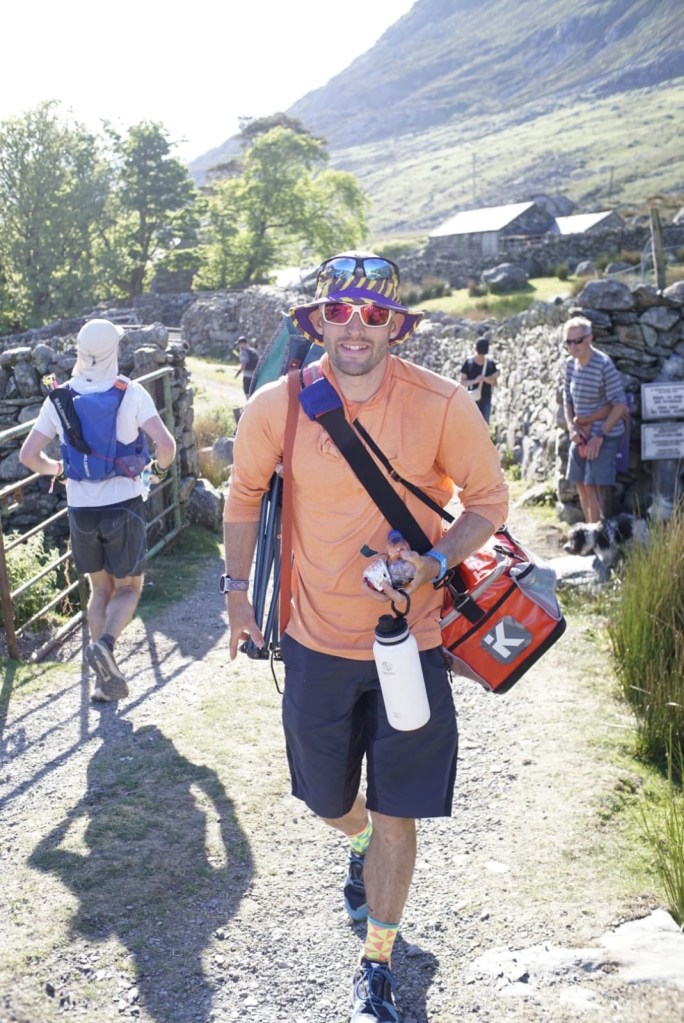
Huge thanks as well to Ryan and Graham at NOX Coaching for building the best training block I’ve ever had. I hit 100K feeling like I was just getting started.
The UTS 100 pushed me further than I thought I could go.
And I finished stronger than I ever imagined.
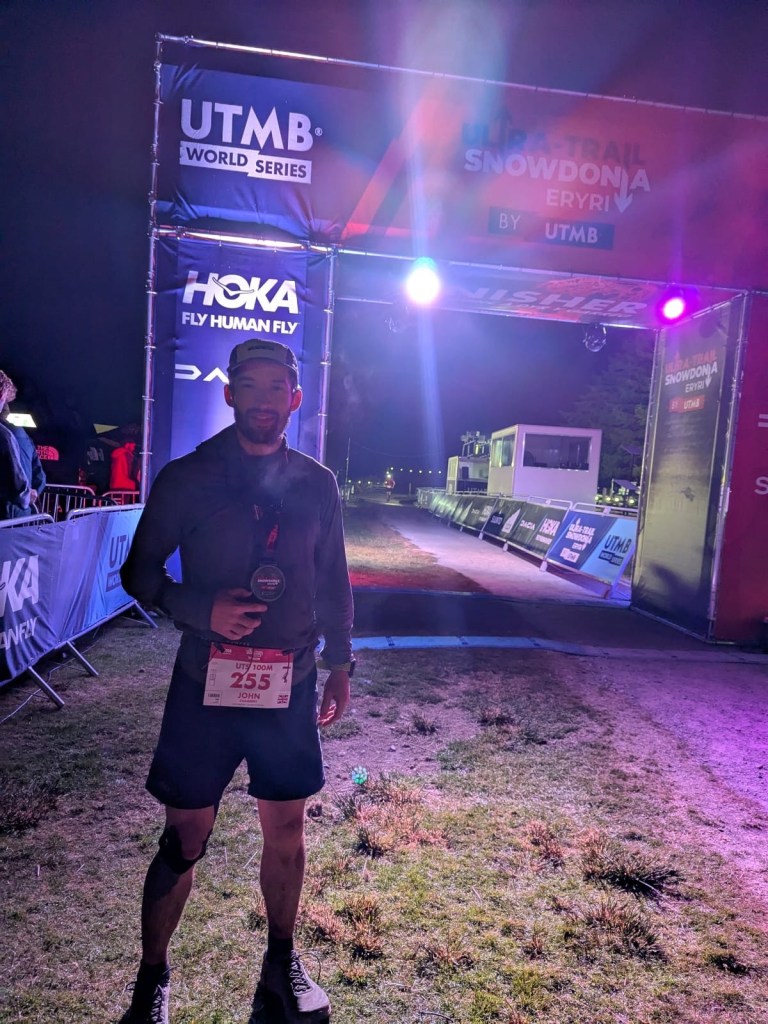
It’s not always about the finish line. Sometimes, the real story is in getting to the start at all—the months of build-up, the early mornings, the setbacks, the grind. And in between the start and the finish? That’s where the real growth happens. The moments of doubt, the highs, the lows, the people you meet, the things you learn about yourself.
This race reminded me that completing an ultra is only part of the journey. The part that mattered more was everything it took to get there. And in that process, I’ve come out mentally and physically stronger than I’ve ever been.
Hope you’ve enjoyed my race report from UTS100M.
Thanks for following along the journey—whether you’re training for your own challenge, crewing a mate, or just curious what it’s like to spend nearly two days running through the mountains. If you’ve got questions, thoughts, or want to share your own experience, drop a comment below—I’d love to hear it.

