
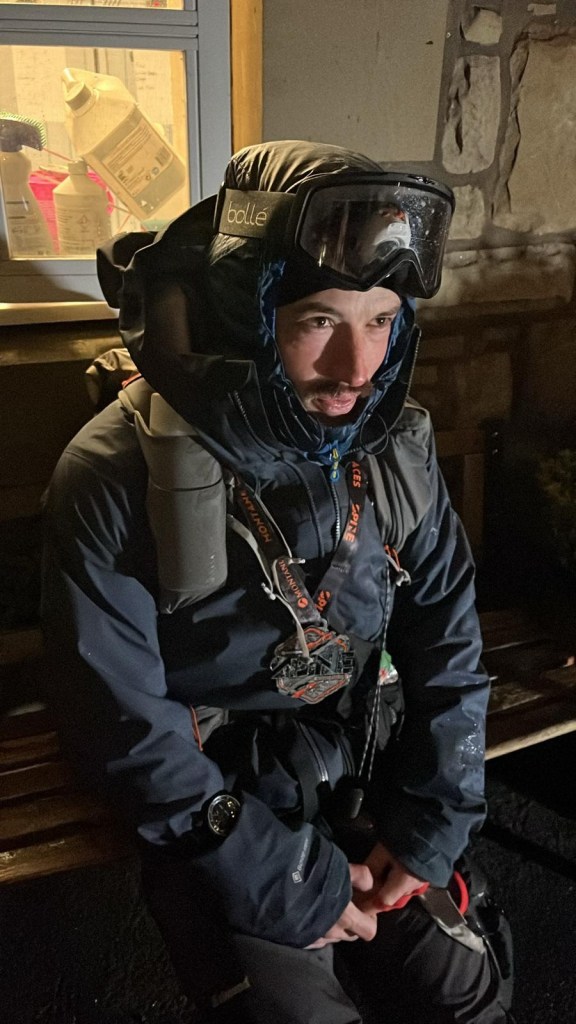
Nearly a year has passed since I ran the Spine Race (Winter Edition), yet the experience still feels like a dream—vivid in flashes but intangible, like trying to hold onto mist. The memories come in fragments: the relentless cold, the ache of exhaustion, the silence of the dark trails. It’s hard to comprehend what I endured, yet even harder to understand how much I miss it.
This reflection isn’t about recounting every step of the journey. It’s about untangling the paradox of ultrarunning and what the Spine has come to mean to me with time and distance.
Running, in its simplest form, is joy. There’s something wonderfully uncomplicated about heading out for an hour and returning home feeling alive and refreshed, no matter the weather. I’ve never come back from a short run without finding some small spark of happiness. But ultras—especially races like the Spine—are an entirely different beast. Why do we voluntarily endure sleepless nights, frozen fingers, burning legs, and the fog of mental exhaustion? Why do we push through 6, 20, or even 160 hours of suffering for a fleeting moment of triumph?
Damien Hall’s words, “All things shall change,” often come to mind. They perfectly describe the unpredictable journey of ultrarunning. One moment you’re trudging through endless misery, certain you can’t continue; the next, you’re flying high on an inexplicable surge of joy. And then it changes again. These highs and lows are inevitable, and the fleeting moments of triumph—however brief—keep us coming back. Or do they?
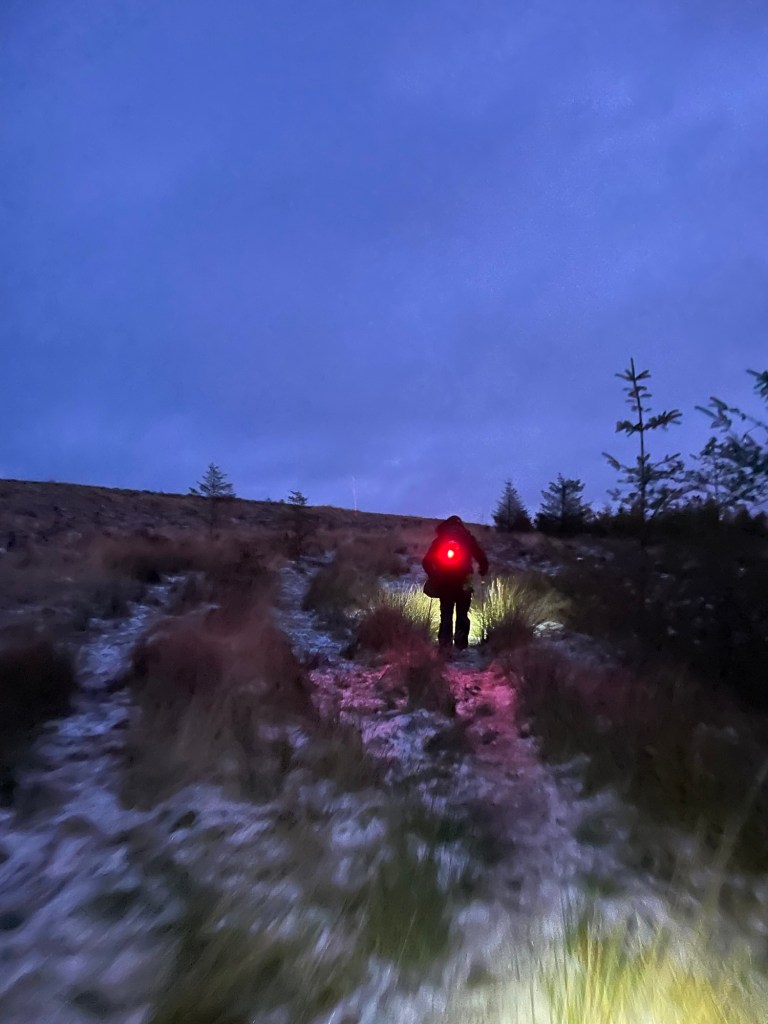
Since the Spine, I’ve wrestled with the question: why suffer for a reward so fleeting? A moment that, while electrifying, fades as quickly as it arrives? And yet, even after it’s gone, I find myself chasing that feeling again—hunting the next spark, the next elusive flicker of light that pulls me forward.
The Spine wasn’t just a race; it was a deeply personal journey of rebuilding. I’d spent five months hiking the Appalachian Trail, an experience that pushed me to my limits physically and mentally. But amidst that achievement, a significant relationship ended. When I returned to the UK, uncertainty hung over me like a cloud, and I needed something to anchor myself, something to pour my energy into.
The Spine became that anchor. It gave me structure, purpose, and direction when I needed them most. From the moment I committed to it, the race consumed me. Week after week, I showed up to grind out the miles, balancing intense training with a full-time job. I spent hours obsessing over every detail—what gear I’d carry, what food I’d need, how I’d cope with the brutal conditions. The logistics alone were daunting, but the emotional toll was heavier.
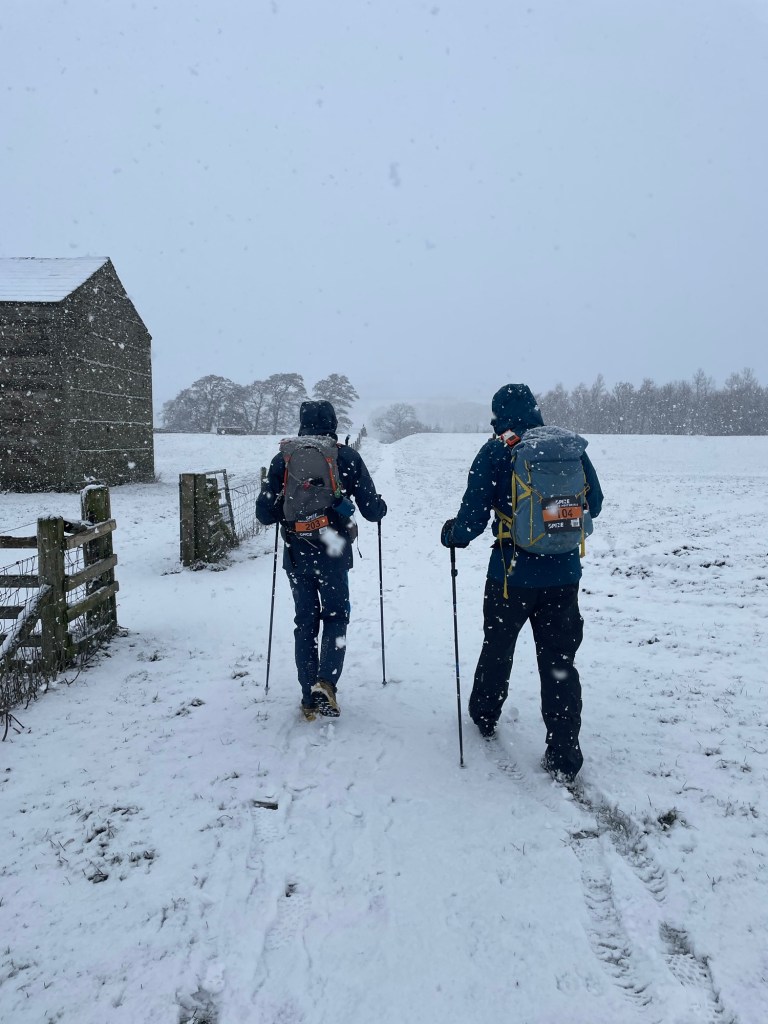
There were nights when doubt crept in, whispering questions I didn’t want to face. Why was I doing this? Could I handle it? Would all this effort be enough? Some mornings, the simple act of lacing up my shoes and stepping out the door felt harder than the miles themselves.
A friend of mine, Graham, once told me, “It’s not the journey to the finish line that matters most; it’s the journey to the start.” He was right. By the time you stand at the start line, you’ve already won half the battle. The miles you’ve logged, the planning, the sacrifices—all of it builds the foundation for what’s to come. Crossing the finish line becomes the reward for everything you’ve endured to get there.
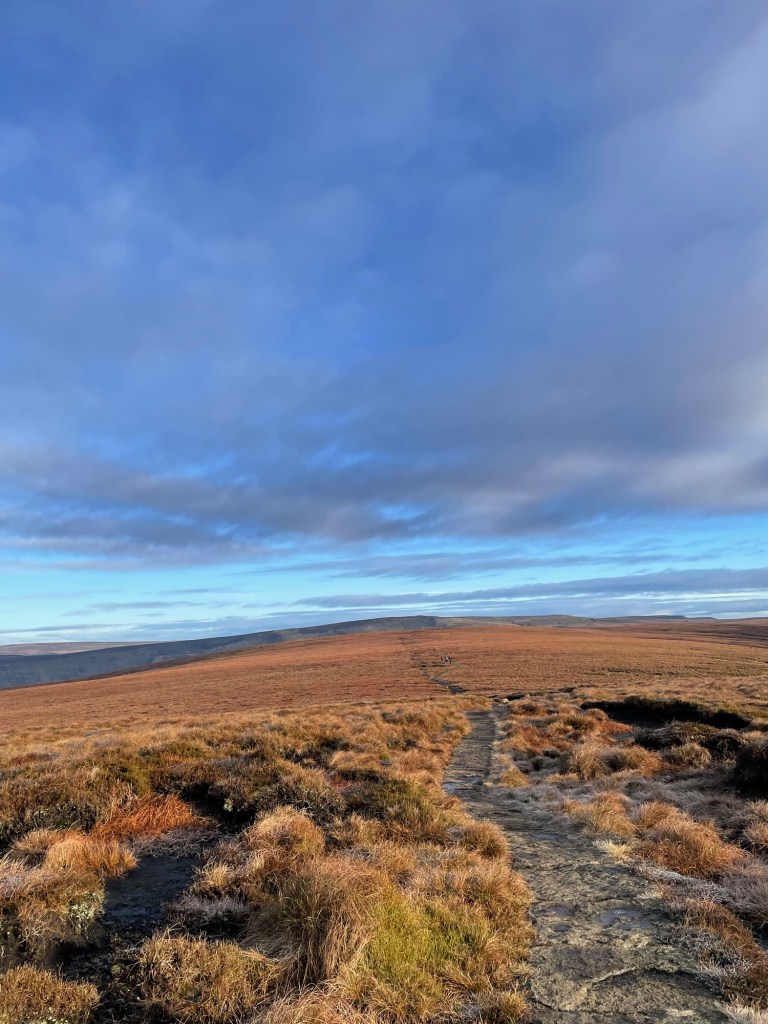
The Spine was an emotional rollercoaster, a microcosm of life’s extremes. Ultrarunners often talk about the “pain cave,” but that description feels incomplete to me. It’s not just about pain—it’s a space where every emotion exists.
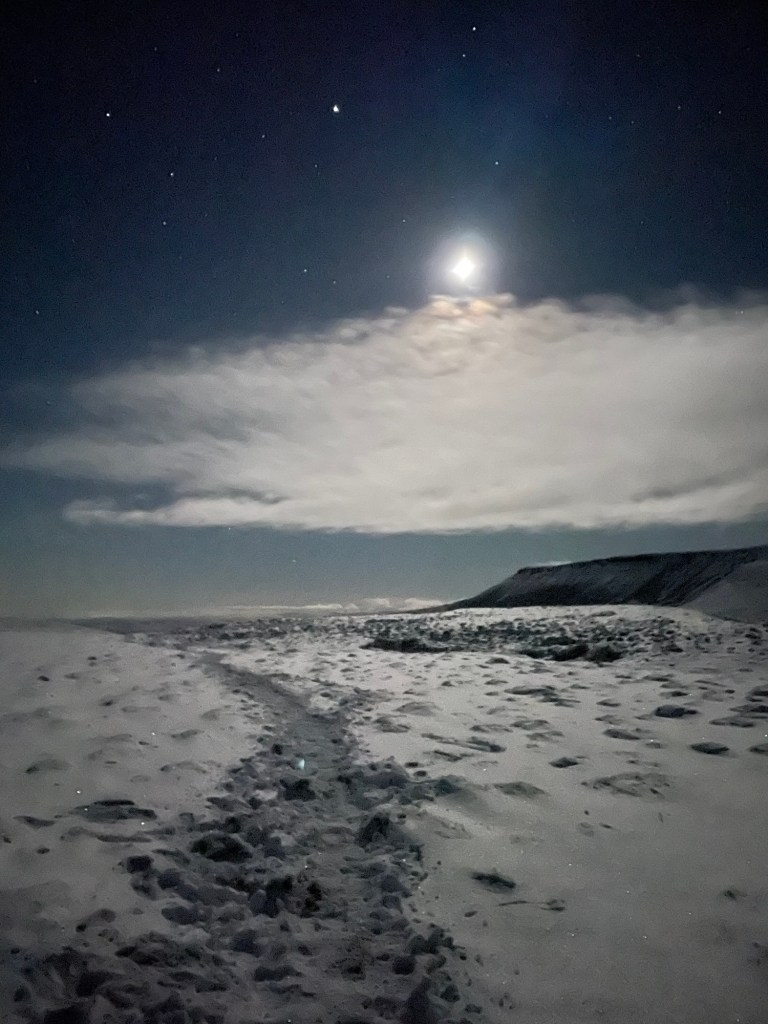
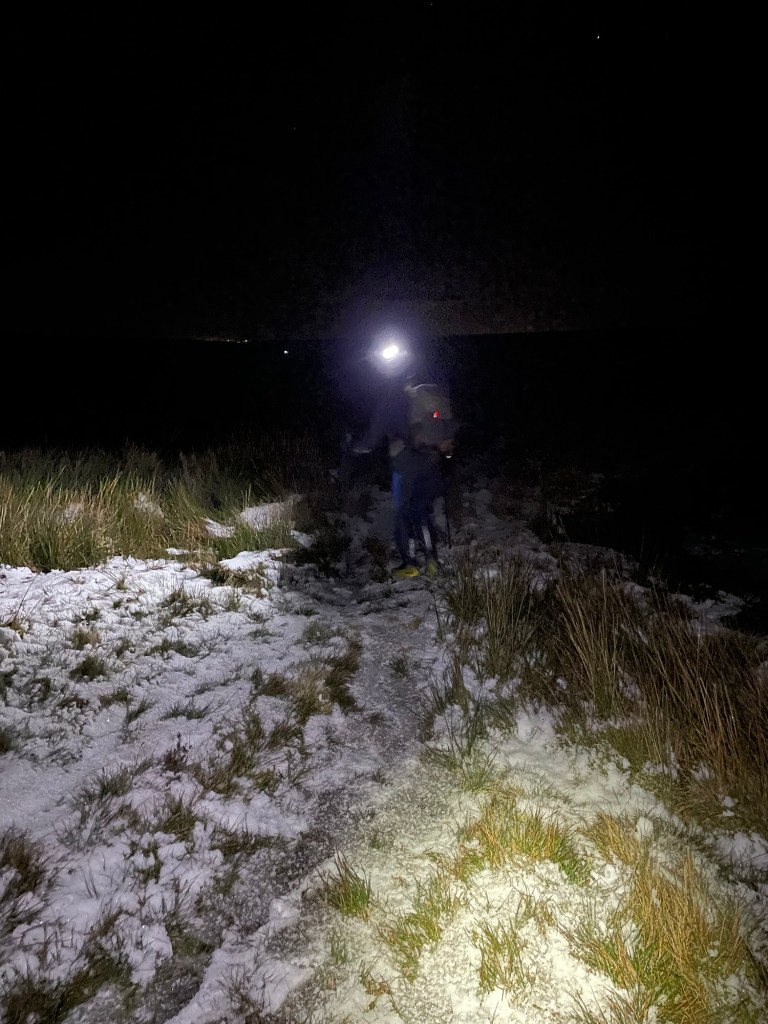
One moment, I’d be trudging through a storm, consumed by doubt and fatigue. The next, I’d crest a hill to see frost glittering under moonlight, and my heart would swell with gratitude for simply being there. Then, without warning, a biting wind or a navigation error would knock me back down. The Spine forced me to accept this unpredictability, to let go of control and trust in my ability to keep moving forward no matter what came next.
I needed to prove to myself that I could achieve something monumental, not to impress anyone else but to rebuild my confidence and remind myself of my resilience. It wasn’t just a physical test; it was a mental and emotional one.
Even now, I find myself questioning why we do these things. Why willingly step into a world of suffering for a fleeting reward? Perhaps the answer lies in the process itself. Ultrarunning strips away all pretense, forcing you to confront your limits and discover what you’re truly capable of. It’s not just about crossing the finish line; it’s about who you become along the way.
Damien Hall’s mantra, “All things shall change,” continues to resonate. Pain gives way to joy, despair transforms into hope, and exhaustion melts into triumph. The Spine wasn’t just a race—it was a reflection of life’s impermanence, condensed into 160 hours of relentless forward motion.
Nearly a year later, the Spine still shapes me. The lessons I learned on those frozen trails—about resilience, adaptability, and finding beauty in struggle—remain with me in unexpected ways. I’ve realized the true reward of ultrarunning isn’t the finish line; it’s the transformation that happens during the journey.
The Spine pushed me farther than I thought possible, proving that when I fully commit to a goal, I’m capable of more than I imagined. It taught me to embrace uncertainty, to adapt to ever-changing conditions, and to trust in my ability to endure.
Would I do it again? Without hesitation. For all the pain and suffering, the Spine gave me something far more valuable than a fleeting moment of ecstasy. It gave me a deeper understanding of myself, a profound appreciation for the journey, and an unshakable belief in my capacity to endure. And that, more than anything else, is why it was worth it.

